|
||||||||||||
 |
||||||||||||
 |
 |
|||||||||||
|
||||||||||||
|
|
 |
|||||||||||
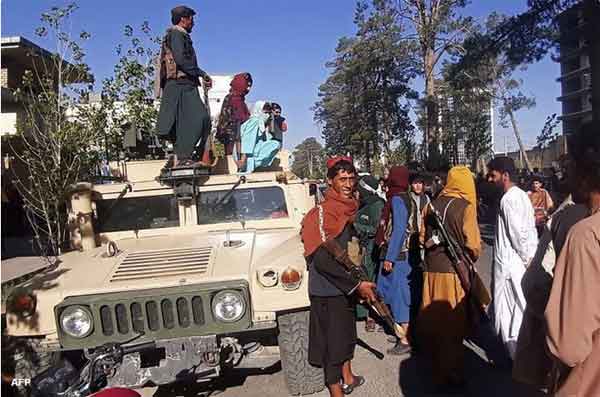
President Biden’s decision to finally withdraw US forces from Afghanistan was the correct decision and certainly overdue. However, the lack of preparation to do so orderly and safely was yet another terrible mistake in a string of mistakes that have plagued the US from day one. Righting the wrong To subsequently dispatch thousands of troops to secure the airport to ensure safe passage for the departees was certainly necessary. But this happened only following the chaos that swept Kabul and sent shivers down the spines of tens of thousands of Afghans and foreign diplomats and civilians. As I see it, this last sorry chapter is continuing a string of mistakes committed by Biden’s predecessors Bush, Obama, and Trump. They have learned nothing about the nature of Afghan society nor from the Soviet Union’s experience in the 1980s, when it departed Afghanistan after ten years of fighting with its tail between its legs. Imposition of democracy The US should not be in the business of spreading democracy by force. We seem to have learned nothing from Vietnam, let alone the US’ long history of instigating and interfering in regime changes. Instead of providing a model of a functioning democracy and human rights through the use of soft power to influence other countries, we come in charging with massive military to change the political landscape, only to end up retreating and delivering the country straight to insurgent forces. Military miscalculation Mis-assessing the source of the Taliban’s resiliency All three administrations preceding Biden’s never fully appreciated or understood the nature of this tribal country, its culture and history, and the Taliban’s resolve to resist regardless of the heavy toll it would sustain. The Taliban are indigenous to Afghanistan, fighting for their country and their culture guided by a deeply religious way of life, following Sharia law using a strict interpretation of the Quran. As they see it, no power would be allowed to exercise any prerogatives in their land and they have no reason to tolerate any foreign intrusion, not to speak of conquest. They are patient and know how to persevere. Sadly, Biden has shown no better understanding of the Taliban’s resolve and tenacity. In his press conference only a week and a half ago, Biden declared that the Taliban’s takeover was not inevitable, as “the Afghan troops have 300,000 well-equipped [soldiers] and an air force against something like 75,000 Taliban,” later stating that “the Taliban overrunning everything and owning the whole country is highly unlikely.” However, Biden’s announcement of the withdrawal three months ago only gave the Taliban time to prepare for their takeover. Intelligence agencies warned the administration of the rapid collapse of the Afghan military and the extreme likeliness of a Taliban victory, and the Afghan government itself was simply unprepared for the Taliban’s onslaught. Failure to engage the tribal chiefs Rampant corruption No cohesive and goal-oriented policy Now that the US is coming to the end of a war that should have ended 19 years ago, the question is, what have we learned from this bitter experience. Leadership bears major responsibility and foresight. We should not be the policeman of the world, but must use our soft power to address injustices and human right abuses wherever they may occur. Our experiment in democracy should be emulated voluntarily, and not forced down the throats of other nations. Finally, now that the Taliban will govern Afghanistan once again, it’s time to heal the wounds and extend to them a helping hand, which may well be the only way we can persuade them to treat their people humanely and with dignity. If nothing else, if we can affect even such a limited outcome, we can look back and take comfort that the longest war in American history and our sacrifices were not totally in vain. NOTE: Dr. Alon Ben-Meir is a professor of international relations at the Center for Global Affairs at NYU. He teaches courses on international negotiation and Middle Eastern studies.
comment by Alon Ben-Meir /HIC.hr
|
||||||||||||
|
||||||||||||
|
|
||||||||||||
Copyright 1999 - 2001 Croatian Information Centre. All rights reserved. Included in this bulletin: Reproduction or copying of images is prohibited. Croatian Information Centre - Service Agreements Contact Croatian Information Centre |
||||||||||||